Recommended Packaging Guidelines
Package smarter, ship safer, and reduce your logistics cost by optimising dimensions and following best practices for handling, sealing and compliance.
As an online retailer, you agree that packaging and shipping costs are inevitable. Selling products online means you must find a way to package and ship products to buyers in good condition, despite long distances. Packing is one of the most common challenges in eCommerce and shipping cost is a significant expense for small e-commerce businesses. The key is to use just-the-right packaging – it should provide sufficient support for products while also helping in cost savings.
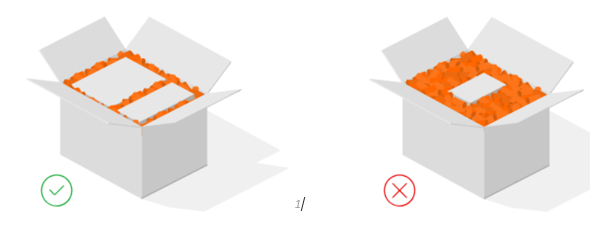
Used boxes lose strength. Ensure your box is rigid and in good condition. A big size box may cause you extra shipping charges. Please ensure the box is of the right size to maintain compact packaging and safe transit.

Too much padding reduces stacking strength. Avoid boxes that are too big for their contents, as they risk getting crushed and lead to higher volumetric weight.
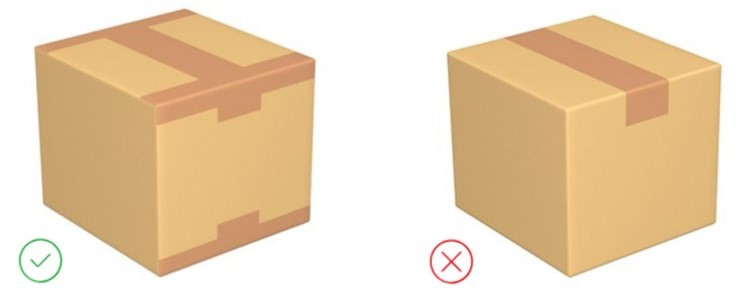
Use proper sealing tape in an H pattern on the top and bottom of the box, and consider strapping heavier boxes for additional support.
Use a unique tamper-proof seal, tamper-proof sachet, or tamper-proof tape on top of the box to ensure smooth reconciliation and to identify proper liability in case of tampering during transit or at the last mile.
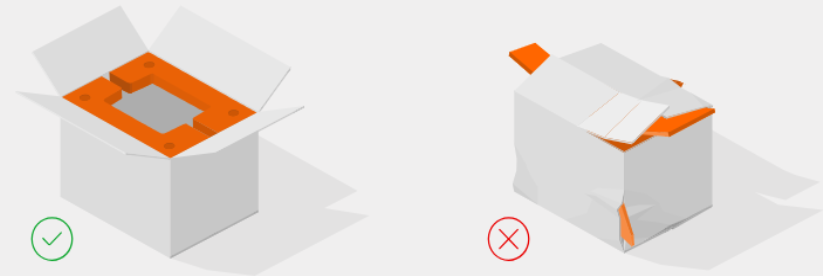
Sharp items must be wrapped in protective padding before being placed in a box. Never allow anything to protrude from a packed box, as it risks damage when stacked and handled.
Transportation of Dangerous Goods is a risk when they are not correctly packed or handled. If the goods are hidden, declared incorrectly, left completely undeclared, or packed or labelled incorrectly, health and safety is compromised.
Did you know that food flavouring, perfumes, chemicals, and electronic equipment can be classed as Dangerous Goods? If you are thinking of sending such commodities, be it for personal or commercial use, please check with us before shipping such items. Any penalty levied by the competent authority will be counter charged to you.
Shipments containing dangerous goods must be fully compliant with the applicable Dangerous Goods (DG) guidelines.
All necessary documents required for in-transit purposes should be attached with the invoice, such as:
- GST invoice with tax breakup
- E-way bill (for shipments above ₹50,000 per waybill), if required
Non-compliance in this regard may cause penalty and imprisonment both. In case of any confusion, please reach out to us and our experts can provide guidance if required.
The logistics provider (3PL) will always calculate chargeable weight as volumetric or actual, whichever is higher, using the methods below:
3 boxes × 10 kg = 30 kg
40 × 40 × 40 cm = 64,000 / 5,000 = 12.8 kg per box
12.8 kg × 3 boxes = 38.4 kg
40 × 40 × 40 cm = 64,000 / 4,000 = 16 kg per box
16 kg × 3 boxes = 48 kg
Using the above formula, the total volumetric weight comes out to 38.4 kg by Air, and 48.0 kg by Surface. The total actual weight is 30 kg, which is lower than volumetric weight. Therefore, the chargeable weight by Air will be 38.4 kg and by Surface will be 48.0 kg.
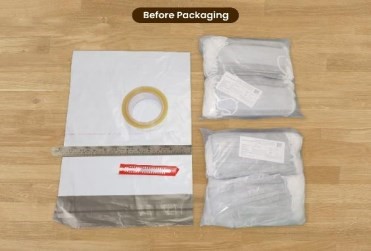
Reducing your packaging dimensions reduces your shipping costs. This starts with knowing your products, inside and out – review your range by measuring size and weight. Then, using the product measurements, audit your existing packaging to measure its suitability.
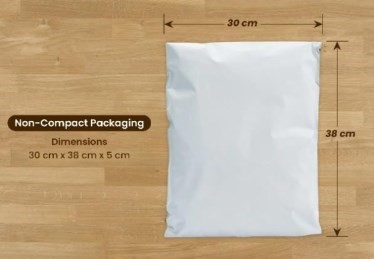
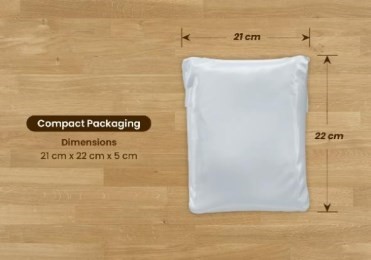
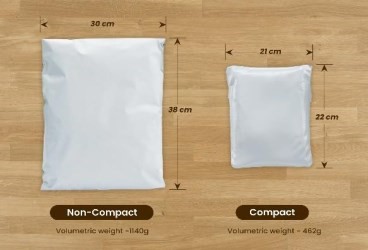
To reduce your packaging dimensions, your audit should consider the protection qualities and how the packaging houses your products. The right sized packaging reduces excess space and void fill. Reducing volumetric weight also reduces shipping costs, while the appropriate packaging increases protection levels.
| Type | Length | Width | Height | Volumetric Weight |
|---|---|---|---|---|
| Compact | 21 cm | 22 cm | 5 cm | 462 g |
| Non-Compact | 30 cm | 38 cm | 5 cm | 1140 g |
As seen above, compact packaging helps in significantly reducing the chargeable weight for the shipment.